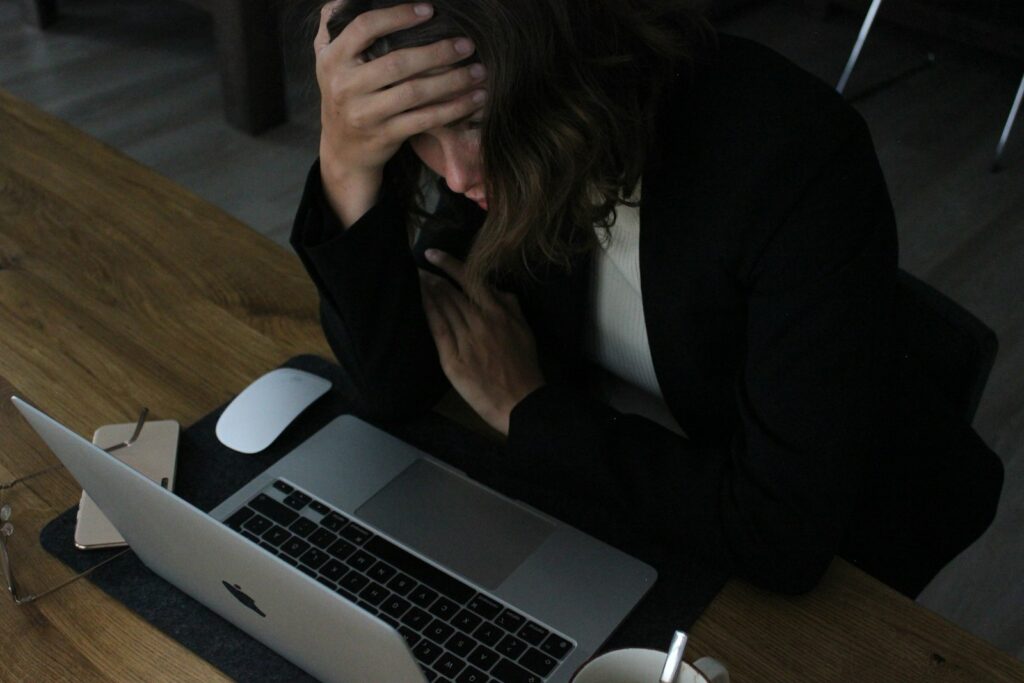
The invisible mental load of motherhood, why ADHD often goes undiagnosed in women, and how to finally feel like you’re getting your brain (and your life) back.
Today, I was sitting around talking with a group of moms on my son’s field trip when we somehow got onto the topic of ADHD and anxiety medication. As we started talking, I realized that almost every single woman in our little circle was taking medication for both, and I couldn’t stop thinking about it.
I’ve been pretty open over the years about my own experiences with anxiety, particularly after having my boys, and I’ve become increasingly interested in understanding how our brains influence our emotions, relationships, productivity, and overall quality of life.
I think what struck me most about this conversation was how normal it all felt. We were a group of moms chatting about medication as casually as we might discuss what our kids are doing for Halloween or what we’re making for dinner.
While I’m grateful that mental health conversations have become so much more normalized, I found myself wondering how many women have spent years feeling unnecessarily frustrated with themselves because they don’t fully understand what’s happening in their own minds.
I’ve had so many conversations with women who are incredibly intelligent, capable, loving, and successful, yet feel like they’re constantly falling behind in their everyday lives.
They’re managing households, raising children, working, maintaining friendships, remembering appointments, and doing their best to be intentional with the people they love. Yet so many feel perpetually overwhelmed, overstimulated, irritable, or mentally exhausted.
And when you add ADHD or anxiety into the equation, even the simplest responsibilities can require a surprising amount of mental energy.
Listen to my podcast episode on Living Easy with Lindsey, “I Was Recently Diagnosed with ADHD: What It Revealed About Chaos, Rejection, Laziness, and Impulsivity”.
What ADHD and anxiety can actually feel like for women
I think one of the biggest misconceptions surrounding ADHD is that it always presents as someone who is visibly hyperactive or incapable of paying attention.
For many women, particularly those who weren’t diagnosed as children, ADHD can be much less obvious.
You might be someone who has a million ideas, gets incredibly excited about new projects, and has the ability to become completely consumed by something you’re passionate about. Yet the laundry has been sitting in the washing machine for two days, you have 47 unanswered text messages, and the simple thought of making an appointment you’ve been putting off for three weeks feels ridiculously overwhelming.
You might also find yourself walking into a room and completely forgetting why you went in there, interrupting conversations because you’re afraid you’ll forget your thought, or becoming so distracted by one task that you forget the five other things you originally intended to accomplish.
ADHD affects executive functioning, which includes our ability to plan, prioritize, regulate attention, manage time, and follow through on responsibilities. These are things we depend on constantly as mothers.
Anxiety adds another layer of difficulty because it can create a persistent sense of urgency around everything we’re already struggling to manage.
You may be physically sitting on the couch with your children while mentally running through tomorrow’s schedule, worrying about something you forgot, replaying a conversation from earlier in the day, or thinking through all the things that could potentially go wrong.
I’ve noticed that when our minds are continuously occupied with what needs to happen next, it becomes increasingly difficult to enjoy what’s happening right in front of us.
How this affects our children and family life
A few years ago, I wrote a blog post about finding rest in the middle of motherhood, and I remember sharing how overwhelmed I could become by the constant noise and activity in our home.
Having two (wildly) energetic boys is a gift that I’m incredibly grateful for, but there have absolutely been moments when the overstimulation has gotten the best of me.
I think many moms understand the feeling of being asked one more question when you’re already mentally trying to accomplish six different things. You love your children dearly, and yet the sound of someone calling “MOM!” from the other room can make you feel like your nervous system is going to explode. Haha.
For women with ADHD, filtering out competing sounds and distractions can be especially difficult. Add anxiety, poor sleep, hormonal changes, and the ordinary demands of motherhood, and it’s understandable why some of us have a much smaller window of patience than we’d like.
I’ve also learned how easily our internal overwhelm can affect the people around us. We might become controlling because we’re anxious about something going wrong, impatient because we’re having difficulty shifting our attention, or emotionally unavailable because we’ve spent the entire day mentally managing everyone else’s needs.
And then we feel guilty, because we know our children deserve gentleness and patience.
I’ve had to remind myself many times that understanding our emotions and neurological challenges is an important part of learning to respond to them wisely. We are still responsible for how we treat the people around us, and I think self-awareness gives us an opportunity to become more intentional about the atmosphere we’re creating in our homes.
I want my boys to understand that emotions are healthy and normal, that we can experience frustration without allowing it to dictate our behavior, and that apologizing and repairing after we’ve responded poorly is an important part of loving people well.
Those are things I’m still learning myself.
How do you know if you have ADHD or anxiety?
Interestingly, many women aren’t diagnosed with ADHD until adulthood. Some have spent years compensating for their difficulties through perfectionism, strict routines, last-minute pressure, or simply working twice as hard to stay on top of things.
Some signs of adult ADHD include:
-
Frequently forgetting appointments, losing belongings, or struggling to remember everyday responsibilities.
-
Difficulty starting tasks, even when they’re important to you.
-
Becoming easily distracted or having trouble finishing what you’ve started.
-
Feeling overwhelmed when trying to organize or prioritize responsibilities.
-
Struggling with time management or consistently underestimating how long things will take.
-
Experiencing restlessness, impulsivity, or difficulty regulating frustration.
Anxiety can present through persistent worry, racing thoughts, difficulty relaxing, irritability, muscle tension, sleep difficulties, and an ongoing sense that something needs your attention.
Of course, experiencing these things occasionally doesn’t automatically mean you have either condition. Poor sleep, chronic stress, depression, and some physical health conditions can create similar symptoms. ADHD also begins in childhood, even when it isn’t recognized until much later.
If these patterns have been persistent and are interfering with your daily life, I’d really encourage you to talk with a qualified medical professional.
I think there’s a tremendous amount of freedom that comes with understanding ourselves more accurately.
A few things that can make everyday life easier
One thing I’ve realized about productivity is that the best systems are usually the ones that require the least amount of maintenance.
I’ve always loved the idea of a beautifully organized life, but I also know that an overly complicated routine can become one more thing to feel guilty about when I inevitably don’t follow through.
For women with ADHD, creating simple external systems can help reduce the amount of information we’re constantly trying to hold in our minds.
Keep everything in one calendar. Rather than trusting yourself to remember appointments, school events, deadlines, and responsibilities, put them somewhere you can easily reference. Use recurring reminders and alarms whenever possible. I’ve learned that getting something out of my head and into a reliable system makes an enormous difference.
Break overwhelming projects into smaller tasks. Sometimes we put things off because the entire project feels mentally exhausting before we’ve even started. If your kitchen is a disaster, give yourself permission to start with the dishes. If your inbox is overflowing, respond to three emails. Small accomplishments create momentum, and momentum makes the next step feel easier.
Simplify recurring decisions. Meal planning, laundry schedules, school routines, and household organization don’t need to be reinvented every week. The more predictable you can make certain parts of your day, the less energy you’ll spend trying to figure everything out.
Pay attention to your body before you become overwhelmed. I’ve become increasingly interested in the connection between our physical sensations and emotional responses. Sometimes our bodies are communicating that we’re overstimulated long before we consciously recognize it. Tight shoulders, shallow breathing, restlessness, and sudden irritability can all be signs that we need to slow down and regulate ourselves.
Consider what support would actually help. Medication, cognitive behavioral therapy, practical ADHD strategies, and professional guidance can make a meaningful difference. Sometimes that support also looks like asking your spouse to take responsibility for certain household tasks, getting help with childcare, or creating boundaries around how much you’re willing to take on.
I think this last one is especially important because so many women have become accustomed to carrying responsibilities that should never have belonged to them alone.
Learning to live within our limitations
As I’ve gotten older, I’ve become more aware of how often I’ve equated being productive with being valuable.
I love accomplishing things. I love creating, learning, working toward goals, and feeling like I’m making the most of my days. But I’ve also had to confront how easily that desire can turn into a constant sense that I’m not doing enough.
I imagine so many mothers live with this same internal pressure.
We want to be patient with our children, present in our relationships, productive in our work, intentional with our faith, physically healthy, emotionally regulated, and somehow maintain a beautiful home in the process.
And when we struggle to keep up with everything, we tend to assume that we’re the problem.
I’ve been thinking a lot lately about how God created us with limitations, and how often we resist accepting them.
We were created to need rest, community, support, and dependence on Him. Yet we regularly fill our lives with more responsibilities than we can reasonably sustain, and then wonder why we feel so disconnected from the peace we’re desperately seeking.
I love the reminder in Matthew 11:28 when Jesus says, “Come to Me, all you who labor and are heavy laden, and I will give you rest.” (NKJV)
I don’t believe that means our ADHD symptoms or anxiety will simply disappear if we pray enough or grow stronger in our faith. We have real neurological, emotional, and physical needs that deserve appropriate attention and care.
But I do believe that learning to surrender our desire to manage everything, while also taking responsibility for the things within our control, can change the way we experience our daily lives.
I want to continue becoming the kind of woman who recognizes when she needs support, who is willing to make changes when something isn’t working, and who creates a home where the people I love feel safe, known, and enjoyed.
And I want my children to see that taking care of ourselves is part of how we learn to take care of others.
I hope the conversations we’re having around ADHD and anxiety continue to become more open and honest. I hope more women seek answers when they’re struggling, feel comfortable receiving treatment when they need it, and learn to develop tools that allow them to live with greater intention.
Most of all, I hope we become increasingly willing to examine the expectations we’re placing on ourselves and recognize which ones are actually helping us build the lives we want.
Our goal isn’t to become women who can handle an impossible amount of responsibility without ever struggling, but to become healthier women who no longer believe we have to.

Want more like this? Subscribe to my Substack to get new posts in your inbox.
No junk mail here, I promise!




Comments